
-
×
 The Ultimate Love-Cheat Code Course With Melli Monaco
1 × $31.00
The Ultimate Love-Cheat Code Course With Melli Monaco
1 × $31.00 -
×
 Purpose Into Profits System With Sherry Watson
1 × $15.00
Purpose Into Profits System With Sherry Watson
1 × $15.00 -
×
 Alpha Leader by Robert Dilts
1 × $5.00
Alpha Leader by Robert Dilts
1 × $5.00 -
×
 The Art Of Strategic Freelance Consulting With Paul Millerd
1 × $39.00
The Art Of Strategic Freelance Consulting With Paul Millerd
1 × $39.00 -
×
 The Wavy Language of Vals With CLARISA ARAGON And JONATHAN SAAVEDRA
1 × $39.00
The Wavy Language of Vals With CLARISA ARAGON And JONATHAN SAAVEDRA
1 × $39.00 -
×
 Emotional Mastery With David Tian
1 × $15.00
Emotional Mastery With David Tian
1 × $15.00 -
×
 Sounds True's Awakening a Joyful Heart with Meditation by Jack Kornfield
1 × $15.00
Sounds True's Awakening a Joyful Heart with Meditation by Jack Kornfield
1 × $15.00 -
×
 Half-guard, the complete system by Roberto Gordo
1 × $6.00
Half-guard, the complete system by Roberto Gordo
1 × $6.00 -
×
 Podcast Liftoff Playbook With Joe Casabona
1 × $15.00
Podcast Liftoff Playbook With Joe Casabona
1 × $15.00 -
×
 Take The Dating World By Storm Book Bundle With Fort Worth Playboy
1 × $23.00
Take The Dating World By Storm Book Bundle With Fort Worth Playboy
1 × $23.00 -
×
 MovNat Metabolic Conditioning With Danny Clark MovNat
1 × $54.00
MovNat Metabolic Conditioning With Danny Clark MovNat
1 × $54.00 -
×
 THE UNLIMITED SEX SYSTEM Bunny And FWPB Collab With Fort Worth Playboy
1 × $31.00
THE UNLIMITED SEX SYSTEM Bunny And FWPB Collab With Fort Worth Playboy
1 × $31.00 -
×
 Sales Interview OS With James Lawrence
1 × $23.00
Sales Interview OS With James Lawrence
1 × $23.00 -
×
 Tip of the Spear by Matt Cook
1 × $5.00
Tip of the Spear by Matt Cook
1 × $5.00 -
×
 Product Launch Formula 2023 With Jeff Walker
1 × $31.00
Product Launch Formula 2023 With Jeff Walker
1 × $31.00
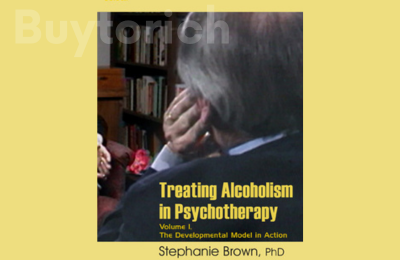
Treating Alcoholism in Psychotherapy The Developmental Model in Action with Stephanie Brown
$8.00
Treating Alcoholism in Psychotherapy The Developmental Model in Action with Stephanie Brown – Immediate Download!
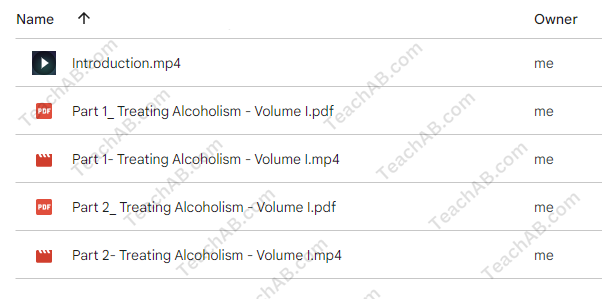
Content Proof:
Overview
Alcoholism, which is frequently stigmatized, is a complicated disorder that is entwined with social difficulties, psychological distress, and emotional upheaval. Treating the alcoholic: a developmental model of recovery, written by Stephanie Brown, takes us on a journey that goes beyond traditional treatment approaches. This ground-breaking study, which was first published in 1985, emphasizes a more dynamic recovery process and offers a multifaceted approach to understanding and treating alcoholism.
For those struggling with addiction, Dr. Brown’s developmental model is a ray of hope, not just a manual for therapists. She challenges the long-held belief that abstinence is a static condition by introducing novel ideas like the “continuum of recovery,” which portrays it as a dynamic journey with a range of emotional and psychological stages. We shall discover the priceless lessons this work provides for practitioners and others pursuing recovery as we continue our investigation.
Comprehending the Developmental Model
The core of Stephanie Brown’s program is its focus on a recovery continuum. She encourages us to see recovery as a journey, similar to navigating a river with its ebbs and flows, in contrast to conventional approaches that divide people into binary stages of sobriety or relapse. This flexibility acknowledges that people may go through different phases of rehabilitation, each with its own set of obstacles and successes.
The Recovery Phases
Brown highlights a number of crucial phases in the rehabilitation process. Every level presents unique obstacles and chances for development. Here is a thorough summary:
| Stage | Description |
| Pre-contemplation | Individuals are unaware of the extent of their problem with alcohol and may deny any need for change. |
| Contemplation | Awareness begins to develop, leading to ambivalence about drinking and a desire for change. |
| Preparation | Individuals prepare to take action, seeking resources and support for their recovery journey. |
| Action | This phase involves active steps to reduce or eliminate alcohol consumption, often marked by significant lifestyle changes. |
| Maintenance | The focus shifts to sustaining sobriety and implementing strategies to handle potential triggers and stressors. |
| Relapse | A return to drinking may occur, but it is framed as a common part of the recovery process, offering lessons and opportunities for growth. |
This representation of stages offers a dynamic framework for understanding individual recovery paths, highlighting that setbacks do not equate to failure but rather provide opportunities for learning and resilience.
Emotional and Psychological Challenges
As individuals traverse this spectrum of recovery, they encounter a myriad of emotional and psychological challenges. Dr. Brown emphasizes the role of emotional healing during these stages, where feelings of shame, guilt, and isolation often surface. Navigating through these emotions can be daunting, akin to walking through a dense fog without a clear path. Yet, through therapy and a support system, individuals can gradually find clarity and direction.
Especially in early recovery, many individuals grapple with intense cravings, emotional upheaval, and the temptation to resort to old habits as a coping mechanism. Dr. Brown’s work reminds us that understanding these challenges is critical for both therapists and individuals. The collaboration between the therapist, the patient, and an Alcoholics Anonymous (AA) counselor creates a triadic relationship that amplifies the chances of sustained recovery. This relationship is not just a support network; it is a partnership that fosters accountability, understanding, and shared experience.
Stephen Brown’s Integration of AA Principles
One of the remarkable aspects of Brown’s work is her ability to weave together the principles of Alcoholics Anonymous with psychotherapy. This integration not only enriches the therapeutic process but also enhances its efficacy.
The Loss of Control Concept
Brown’s developmental paradigm is based on the crucial idea of “loss of control.” This concept emphasizes the idea that alcoholism is essentially influenced by psychological and emotional elements and is not just a matter of willpower. Dr. Brown pulls down walls of guilt and self-blame by presenting addiction in these ways, enabling people to see their battle as a complicated interaction of multiple elements.
The therapeutic connection becomes crucial in this situation. People can discuss their feelings and difficulties in a safe environment when a collaborative method is used, which combines insights from psychotherapy with the shared lived experiences inside Alcoholics Anonymous. By providing a greater understanding of the repetitive nature of addiction, this shared experience can frequently fill the gap left by traditional therapy paradigms.
The Part Family Dynamics Play
How family dynamics affect alcoholism treatment is another important topic Brown covers. The complexities of familial relationships frequently have a significant impact on the course of addiction as well as the healing process. Alcohol dependence can be unintentionally perpetuated by dysfunctional familial behaviors, which can lead to hard-to-break cycles.
In her book, Dr. Brown outlines practical methods for dealing with these family dynamics, stressing the importance of communication and sympathetic comprehension in the healing process. This method not only helps people become clean from alcohol, but it also educates family members, making them helpful allies in the recovery process.
Impact and Clinical Uses
The usefulness of this developmental model in clinical settings is becoming increasingly clear as experts in addiction treatment and mental health investigate it. By providing frameworks, theories, and real-world applications that have the potential to transform practice, Brown’s book acts as a compass.
Clinical Applications and Impact
As professionals in mental health and addiction treatment explore this developmental model, its utility in clinical settings becomes more evident. Brown’s text serves as a guiding compass, offering frameworks, theories, and practical applications that can revolutionize practice.
Essential Topics Addressed
Throughout the pages of treating the alcoholic, Dr. Brown delves deep into critical topics relevant to both clinicians and individuals on the recovery journey, such as:
- The importance of a therapeutic alliance: Building trust and rapport between the therapist and patient serves as the foundation for successful treatment.
- Understanding relapse: Dr. Brown frames relapse as an opportunity for learning rather than a definitive failure.
- The significance of peer support: The role of AA and other support groups in providing communal reinforcement of recovery efforts.
Lasting Relevance in Clinical Practice
The principles outlined in this work continue to resonate in contemporary addiction treatment approaches. With the ongoing evolution of psychotherapy and addiction methodologies, treating the alcoholic remains relevant as it galvanizes clinicians to adopt a holistic, empathetic, and developmentally informed framework for supporting their clients.
Research has shown that integrating psychological insights with community support structures significantly enhances the likelihood of long-term recovery. For instance, a study published in the American Journal of Addiction found that individuals participating in both psychotherapy and recovery groups had almost double the success rate compared to those who pursued only one treatment route.
In conclusion
Stephanie Brown’s groundbreaking book, Treating the Alcoholic: A Developmental Model of Recovery, has revolutionized our knowledge of alcoholism and recovery. We learn to view recovery as a continuous evolution characterized by resilience, learning, and emotional growth rather than as a sequence of endpoints via the creative lens of a developmental model.
Dr. Brown provides a comprehensive approach that enhances our comprehension of the intricacies associated with alcoholism by combining psychotherapy methods with the fundamental ideas of Alcoholics Anonymous. Her understanding of emotional difficulties, family dynamics, and the therapeutic alliance opens doors for those impacted by addiction to not only heal but also regain their humanity and hope.
The developmental model offers a novel viewpoint and confirmation that the path to recovery is complex, uncertain, and ultimately, very human in a society that frequently reduces addiction to a binary narrative of success and failure. Clinicians and individuals who study the profound teachings of Dr. Brown’s work are better prepared to handle the frequently tumultuous seas of recovery with empathy, comprehension, and unwavering dedication.
Treating Alcoholism in Psychotherapy The Developmental Model in Action with Stephanie Brown
Frequently Asked Questions:
Business Model Innovation: We use a group buying approach that enables users to split expenses and get discounted access to well-liked courses. Despite worries regarding distribution strategies from content creators, this strategy helps people with low incomes.
Legal Aspects: There are many intricate questions around the legality of our actions. There are no explicit resale restrictions mentioned at the time of purchase, even though we do not have the course developers’ express consent to redistribute their content. This uncertainty gives us the chance to offer reasonably priced instructional materials.
Quality Control: We make certain that every course resource we buy is the exact same as what the authors themselves provide. It’s crucial to realize, nevertheless, that we are not authorized suppliers. Therefore, our products do not consist of:
– Live coaching calls or sessions with the course author.
– Access to exclusive author-controlled groups or portals.
– Membership in private forums.
– Direct email support from the author or their team.
We aim to reduce the cost barrier in education by offering these courses independently, without the premium services available through official channels. We appreciate your understanding of our unique approach.
Be the first to review “Treating Alcoholism in Psychotherapy The Developmental Model in Action with Stephanie Brown”
You must be logged in to post a review.
Related products

$8.00

Psychology
$5.00


$8.00


Psychology
$5.00

$23.00

$15.00

$233.00
Reviews
There are no reviews yet.