
-
×
 Master The Bedroom Program With Apollonia Ponti
1 × $31.00
Master The Bedroom Program With Apollonia Ponti
1 × $31.00 -
×
 Flagship Microsoft PM Interview Course By Product Alliance
1 × $69.00
Flagship Microsoft PM Interview Course By Product Alliance
1 × $69.00 -
×
 Alpha Leader by Robert Dilts
1 × $5.00
Alpha Leader by Robert Dilts
1 × $5.00 -
×
 Build A Harem Bundle With Fort Worth Playboy
1 × $23.00
Build A Harem Bundle With Fort Worth Playboy
1 × $23.00 -
×
 Create Your 7-Figure Brand Story With Celinne Da Costa
1 × $6.00
Create Your 7-Figure Brand Story With Celinne Da Costa
1 × $6.00 -
×
 Connect to Your Ancestors Through Mayan Cosmology With Grandmother Flordemayo The Shift Network
1 × $23.00
Connect to Your Ancestors Through Mayan Cosmology With Grandmother Flordemayo The Shift Network
1 × $23.00 -
×
 6 Powerful Steps for Business Empowerment With John Demartini
1 × $31.00
6 Powerful Steps for Business Empowerment With John Demartini
1 × $31.00 -
×
 Disrupter School Guidebook: How to Raise LTV by Facebook Disrupter
1 × $31.00
Disrupter School Guidebook: How to Raise LTV by Facebook Disrupter
1 × $31.00 -
×
 Flagship Amazon PM Interview Course By Product Alliance
1 × $69.00
Flagship Amazon PM Interview Course By Product Alliance
1 × $69.00 -
×
 Unconditional Money With Becca Francis
1 × $31.00
Unconditional Money With Becca Francis
1 × $31.00 -
×
 How to Get Over Anyone in Few Days: Breakups Will Never Hurt Like Before (Volume 1)
1 × $5.00
How to Get Over Anyone in Few Days: Breakups Will Never Hurt Like Before (Volume 1)
1 × $5.00 -
×
 LEAP EXPERT Package: All LEAP Lessons + The FULL White Dove Masterclass Series With Nate Zeleznick
1 × $186.00
LEAP EXPERT Package: All LEAP Lessons + The FULL White Dove Masterclass Series With Nate Zeleznick
1 × $186.00 -
×
 Sinn Teleconference About Dating
1 × $5.00
Sinn Teleconference About Dating
1 × $5.00 -
×
 How to Play Piano By Pamela Pike
1 × $5.00
How to Play Piano By Pamela Pike
1 × $5.00 -
×
 The Calling Women And Texting Women Program + The Online Mentorship Program + The Simple Inner Game System by Dennis Miedema
1 × $5.00
The Calling Women And Texting Women Program + The Online Mentorship Program + The Simple Inner Game System by Dennis Miedema
1 × $5.00 -
×
 4 Product Bundle With Allie Bloyd
1 × $39.00
4 Product Bundle With Allie Bloyd
1 × $39.00 -
×
 Heal Yourself From Trauma With Somatic Intelligence With Chen Lizra The Shift Network
1 × $54.00
Heal Yourself From Trauma With Somatic Intelligence With Chen Lizra The Shift Network
1 × $54.00 -
×
 The Life and Works of Jane Austen By Devoney Looser
1 × $5.00
The Life and Works of Jane Austen By Devoney Looser
1 × $5.00 -
×
 Execute The Program - The ShyAwkward Girl by Jeff Allen
1 × $5.00
Execute The Program - The ShyAwkward Girl by Jeff Allen
1 × $5.00 -
×
 Attune Your Intuition by Rob Schwartz and Liesel Fricke
1 × $62.00
Attune Your Intuition by Rob Schwartz and Liesel Fricke
1 × $62.00 -
×
 Quantum Healing With The Energy Codes® With Sue Morter The Shift Network
1 × $23.00
Quantum Healing With The Energy Codes® With Sue Morter The Shift Network
1 × $23.00 -
×
 The Great Tours: Washington DC By Richard Kurin
1 × $5.00
The Great Tours: Washington DC By Richard Kurin
1 × $5.00 -
×
 ThaiVedic Bundle With Sebastian Bruno ThaiVedic
1 × $93.00
ThaiVedic Bundle With Sebastian Bruno ThaiVedic
1 × $93.00 -
×
 BLESSED INSTAGRAM UNIVERSITY With Sorelle Amore
1 × $39.00
BLESSED INSTAGRAM UNIVERSITY With Sorelle Amore
1 × $39.00 -
×
 The Reels Academy 2022 With Anneke Odendaal
1 × $39.00
The Reels Academy 2022 With Anneke Odendaal
1 × $39.00 -
×
 The October Man Sequence Collection by IN10SE and Swinggcat
1 × $5.00
The October Man Sequence Collection by IN10SE and Swinggcat
1 × $5.00 -
×
 Atmospheric Composite FX Overlays Volume 2 by PRO EDU
1 × $8.00
Atmospheric Composite FX Overlays Volume 2 by PRO EDU
1 × $8.00 -
×
 Four Elements Manifestation With Brian Osborne
1 × $124.00
Four Elements Manifestation With Brian Osborne
1 × $124.00 -
×
 Body Language of Love and Dating by Vanessa Van Edwards
1 × $5.00
Body Language of Love and Dating by Vanessa Van Edwards
1 × $5.00 -
×
 Integrating Attachment Science with Today's Most Popular Approaches in Psychotherapy With Pesi
1 × $85.00
Integrating Attachment Science with Today's Most Popular Approaches in Psychotherapy With Pesi
1 × $85.00 -
×
 Frequency Separation Photoshop Action and Retouching Course by Earth Oliver
1 × $8.00
Frequency Separation Photoshop Action and Retouching Course by Earth Oliver
1 × $8.00 -
×
 The Ultimate Love-Cheat Code Course With Melli Monaco
1 × $31.00
The Ultimate Love-Cheat Code Course With Melli Monaco
1 × $31.00 -
×
 Emotional Mastery With David Tian
1 × $15.00
Emotional Mastery With David Tian
1 × $15.00 -
×
 Red Pill Psychology by Peter Wright and Paul Elam
1 × $5.00
Red Pill Psychology by Peter Wright and Paul Elam
1 × $5.00 -
×
 Understand Attraction by Adam Lyons
1 × $5.00
Understand Attraction by Adam Lyons
1 × $5.00 -
×
 The Wavy Language of Vals With CLARISA ARAGON And JONATHAN SAAVEDRA
1 × $39.00
The Wavy Language of Vals With CLARISA ARAGON And JONATHAN SAAVEDRA
1 × $39.00 -
×
 Juicy Relational Skills for Emergence Part 1: The EMERGENCE/SEXUALITY Circuit– Reactivity and Healing With Sarah Peyton
1 × $139.00
Juicy Relational Skills for Emergence Part 1: The EMERGENCE/SEXUALITY Circuit– Reactivity and Healing With Sarah Peyton
1 × $139.00 -
×
 Infinity Engine Content Creation Workshop With Kenneth Yu
1 × $23.00
Infinity Engine Content Creation Workshop With Kenneth Yu
1 × $23.00 -
×
 Tarot with Pendulums With Pendulum Alchemy
1 × $31.00
Tarot with Pendulums With Pendulum Alchemy
1 × $31.00 -
×
 Waking Up - A Meditation Course by Sam Harris
1 × $5.00
Waking Up - A Meditation Course by Sam Harris
1 × $5.00

Time Limited Dynamic Psychotherapy with Hanna Levenson
$8.00
Time Limited Dynamic Psychotherapy with Hanna Levenson – Immediate Download!
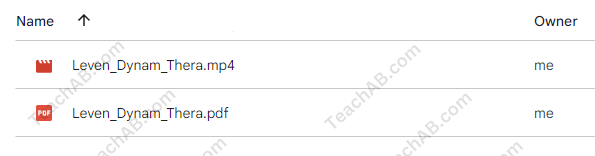
Content Proof:
Hanna Levenson’s model of time-limited dynamic psychotherapy is reviewed.
Time-limited dynamic psychotherapy (TLDP) is a ray of hope in the changing field of mental health treatment for patients and professionals who are struggling with complex interpersonal dynamics. This novel therapeutic technique, which was created by the perceptive Hanna Levenson, combines a keen awareness of relational complexities with time sensitivity.
By establishing links between past experiences and current behaviors, TLDP illuminates the dark corners of psychological suffering, which are frequently hidden by the complexities of human interaction. In light of the growing need for quick but efficient therapeutic fixes, Levenson’s method not only takes care of patients’ current issues but also gives them the long-term resources they need to succeed in their relationships.
By exploring Hanna Levenson’s writings, especially her extensive manual “Time-limited dynamic psychotherapy: A guide to clinical practice,” we can better comprehend her paradigm-shifting approach. Carefully organized into thirteen in-depth parts, this book is a priceless tool for medical professionals. It skillfully blends therapeutic approaches, theoretical underpinnings, and real-world applications, making it suitable for both seasoned professionals and people who are interested in learning more about brief therapy modalities.
TLDP’s theoretical underpinnings
A diverse range of psychological ideas serve as the foundation for Levenson’s work. She combines aspects of systemic theories, cognitive-behavioral techniques, and psychoanalytic theory to provide therapists with a complex perspective on their patients’ problems. For example, psychoanalytic thought promotes investigating unconscious mechanisms that could influence patterns of relationships. Therapists can assist deep insights in a short amount of time by shedding light on these underlying dynamics.
Cognitive-behavioral theory advances our knowledge of the interactions between emotional experiences and beliefs and behaviors. Patients can challenge and change their views and engage in healthy interpersonal interactions by identifying maladaptive thought patterns. Systems theory, on the other hand, shifts the emphasis from the person to the larger context in which connections develop.
A wide range of psychological difficulties can be addressed by TLDP thanks to its integrated approach. It recognizes that a large number of patients exhibit persistent and widespread dysfunctional relational patterns, frequently brought on by their prior experiences. Levenson therefore stresses the significance of treating these relational problems as essential components of a network of interrelated experiences rather than as discrete occurrences. The main theoretical pillars of TLDP are listed below:
| Theory | Contribution to TLDP |
| Psychoanalytic Theory | Explores unconscious processes influencing behavior |
| Cognitive-Behavioral Theory | Recognizes maladaptive thoughts impacting interactions |
| Systems Theory | Considers broader relational contexts and dynamics |
Therapeutic Techniques utilized in TLDP
Hanna Levenson meticulously outlines various therapeutic techniques that therapists employ during TLDP sessions. At the heart of this approach is the emphasis on fostering emotional awareness. For many patients, increased awareness leads to better emotional regulation and enhances their ability to express feelings appropriately within relationships.
One of the hallmark techniques in TLDP is the use of interpersonal feedback. This involves the therapist sharing their observations and interpretations of the patient’s relational patterns during the therapy process. Such feedback becomes a mirror in which patients can see their own behavioral themes, providing an opportunity for reflection and transformation. This practice is akin to holding a glass up to a gleaming surface; it reveals both the clarity and the distortions of one’s relational dynamics.
In addition, Levenson emphasizes the necessity of creating a therapeutic alliance. A strong rapport between therapist and patient not only fosters trust but also provides a safe space where vulnerable emotions can surface. This relationship becomes a crucial component in addressing interpersonal issues, as many problems arise from difficulty in trusting others.
Key techniques in TLDP:
- Emotional Awareness: Cultivating understanding of one’s feelings
- Interpersonal Feedback: Sharing observations about relational patterns
- Therapeutic Alliance: Building a strong rapport to foster trust
These strategies collectively create a robust therapeutic environment that encourages patients to confront their relational difficulties head-on, paving the way for meaningful change.
Real-World Uses for TLDP
There are numerous clinical scenarios in which TLDP can be used practically. In managed care settings, for example, where time constraints are common, clinicians find this paradigm especially helpful. In a time when short-term therapy is frequently required, TLDP offers a methodical yet flexible framework that therapists can use efficiently in a small number of sessions.
Clear therapeutic objectives that direct the therapeutic process are outlined in Levenson’s handbook. A journey that is both transformative and difficult, these objectives frequently involve improving emotional awareness, changing unhealthy relationship patterns, and encouraging healthier interpersonal relationships.
Its adaptability to various patient populations, such as individuals with mood disorders, anxiety disorders, and personality disorders, is one of TLDP’s most appealing features. Levenson’s papers contain numerous case studies that show how effective this strategy is. For instance, after just ten TLDP sessions, a patient who was struggling with chronic depression saw a notable improvement in symptoms. A discernible change toward more fulfilling relationships was also used to gauge their development, in addition to the reduction of symptoms.
Synopsis of practical applications:
| Clinical Context | Benefits of TLDP |
| Managed care settings | Structured framework for brief treatment |
| Mood and anxiety disorders | Addresses underlying relational issues contributing to symptoms |
| Personality disorders | Promotes healthier interpersonal dynamics and emotional awareness |
Reception of TLDP in Contemporary Practice
The reception of Levenson’s contributions to the field of psychotherapy has generally been positive, reflecting the innovative nature and practical efficacy of her model. As the world of mental health care grapples with the challenges of increasingly shorter treatment durations, TLDP stands out due to its flexibility and potential for rapid results. Clinicians appreciate its structured nature, as it allows them to navigate complex psychological issues without feeling overwhelmed, akin to guiding a ship through turbulent waters.
Numerous empirical findings and case studies substantiate the effectiveness of TLDP. Research has shown that patients who engage in TLDP report significant improvements not just in symptom relief, but also in the quality of their relationships. Levenson has been recognized with several awards for her contributions to modern psychotherapy; these accolades speak volumes about the impact of her work, especially in terms of enhancing patient outcomes in various clinical settings.
- Awards and Recognitions:
- Notable accolades for contributions to psychotherapy
- Positive reception from the clinical community based on case studies
- Empirical research supporting effectiveness in diverse patient populations
The documented successes of TLDP further affirm its role as a valuable resource in contemporary practice an aid for therapists seeking to implement effective strategies that resonate with the complexities of human interaction.
In conclusion
In conclusion, Hanna Levenson’s time-limited dynamic psychotherapy provides a thorough and flexible method that is very compatible with the reality of contemporary therapeutic practice. TLDP is a monument to the development of psychotherapy because it integrates multiple theoretical frameworks, places a strong emphasis on interpersonal connections, and offers useful applications.
In a time when people frequently don’t have much time, this novel approach offers a means to make a significant difference by giving patients the resources they need to understand their emotional landscapes and build stronger bonds with others. The promise of TLDP is evident as physicians continue to investigate and incorporate this treatment method, shedding light on the complex dance of human connection.
Frequently Asked Questions:
Business Model Innovation: We use a group buying approach that enables users to split expenses and get discounted access to well-liked courses. Despite worries regarding distribution strategies from content creators, this strategy helps people with low incomes.
Legal Aspects: There are many intricate questions around the legality of our actions. There are no explicit resale restrictions mentioned at the time of purchase, even though we do not have the course developers’ express consent to redistribute their content. This uncertainty gives us the chance to offer reasonably priced instructional materials.
Quality Control: We make certain that every course resource we buy is the exact same as what the authors themselves provide. It’s crucial to realize, nevertheless, that we are not authorized suppliers. Therefore, our products do not consist of:
– Live coaching calls or sessions with the course author.
– Access to exclusive author-controlled groups or portals.
– Membership in private forums.
– Direct email support from the author or their team.
We aim to reduce the cost barrier in education by offering these courses independently, without the premium services available through official channels. We appreciate your understanding of our unique approach.
Be the first to review “Time Limited Dynamic Psychotherapy with Hanna Levenson”
You must be logged in to post a review.
Related products
$5.00

$5.00

$69.00
$62.00

$23.00

Psychology
$148.00

$179.00


$8.00

Reviews
There are no reviews yet.