
-
×
 Beginner Forex Mastery Course With Harrison Uwah - MHU FX Academy
1 × $78.00
Beginner Forex Mastery Course With Harrison Uwah - MHU FX Academy
1 × $78.00 -
×
 The Ultimate Love-Cheat Code Course With Melli Monaco
1 × $31.00
The Ultimate Love-Cheat Code Course With Melli Monaco
1 × $31.00 -
×
 Remote Property Lien Profits Home Study Course With Mike Warren MISU
1 × $23.00
Remote Property Lien Profits Home Study Course With Mike Warren MISU
1 × $23.00 -
×
 The Vikings By Kenneth Harl
1 × $5.00
The Vikings By Kenneth Harl
1 × $5.00 -
×
 Take The Dating World By Storm Book Bundle With Fort Worth Playboy
1 × $23.00
Take The Dating World By Storm Book Bundle With Fort Worth Playboy
1 × $23.00 -
×
 Create Your 7-Figure Brand Story With Celinne Da Costa
1 × $6.00
Create Your 7-Figure Brand Story With Celinne Da Costa
1 × $6.00 -
×
 Creating Your Hearts Desire 2023 With Sonia Choquette
1 × $23.00
Creating Your Hearts Desire 2023 With Sonia Choquette
1 × $23.00 -
×
 The Awakened Heart With Shefali Tsabary
1 × $233.00
The Awakened Heart With Shefali Tsabary
1 × $233.00 -
×
 Master Gorgeous UI Design Course by Pablo Stanley
1 × $5.00
Master Gorgeous UI Design Course by Pablo Stanley
1 × $5.00 -
×
 Creative Strategy Master Course With Nicole Crowell
1 × $54.00
Creative Strategy Master Course With Nicole Crowell
1 × $54.00 -
×
 True Crime: Decoding the Evidence By Elizabeth Murray, Richard Spence and Raychelle Burks
1 × $5.00
True Crime: Decoding the Evidence By Elizabeth Murray, Richard Spence and Raychelle Burks
1 × $5.00 -
×
 Forecast 2024 Clarification With Larry Williams
1 × $15.00
Forecast 2024 Clarification With Larry Williams
1 × $15.00 -
×
 Heal Yourself From Trauma With Somatic Intelligence With Chen Lizra The Shift Network
1 × $54.00
Heal Yourself From Trauma With Somatic Intelligence With Chen Lizra The Shift Network
1 × $54.00 -
×
 MovNat Level 1 Fundamentals With Danny Clark And Stefano Tripney MovNat
1 × $78.00
MovNat Level 1 Fundamentals With Danny Clark And Stefano Tripney MovNat
1 × $78.00 -
×
 Human Design Reader Certification With Krystle Alfarero
1 × $155.00
Human Design Reader Certification With Krystle Alfarero
1 × $155.00 -
×
 Unreal Series Authentic Relationships for Men and Women With Talmadge Harper Harper Healing
1 × $15.00
Unreal Series Authentic Relationships for Men and Women With Talmadge Harper Harper Healing
1 × $15.00 -
×
 Mergers and Acquisitions Toolkit With Domont Consulting
1 × $23.00
Mergers and Acquisitions Toolkit With Domont Consulting
1 × $23.00 -
×
 Digital Dropshipping Mastery With Tanner Planes
1 × $15.00
Digital Dropshipping Mastery With Tanner Planes
1 × $15.00 -
×
 The Federal Code Government Contracting With Jason White
1 × $23.00
The Federal Code Government Contracting With Jason White
1 × $23.00 -
×
 Quantifiable Edges 3 Course Bundle
1 × $31.00
Quantifiable Edges 3 Course Bundle
1 × $31.00 -
×
 Connect to Your Ancestors Through Mayan Cosmology With Grandmother Flordemayo The Shift Network
1 × $23.00
Connect to Your Ancestors Through Mayan Cosmology With Grandmother Flordemayo The Shift Network
1 × $23.00 -
×
 Science, Spirituality and the Noosphere: Hope for Humanity’s Future by Matthew Fox and Brian Thomas Swimme
1 × $54.00
Science, Spirituality and the Noosphere: Hope for Humanity’s Future by Matthew Fox and Brian Thomas Swimme
1 × $54.00

The Early Middle Ages By Philip Daileader
$5.00
The Early Middle Ages By Philip Daileader – Immediate Download!
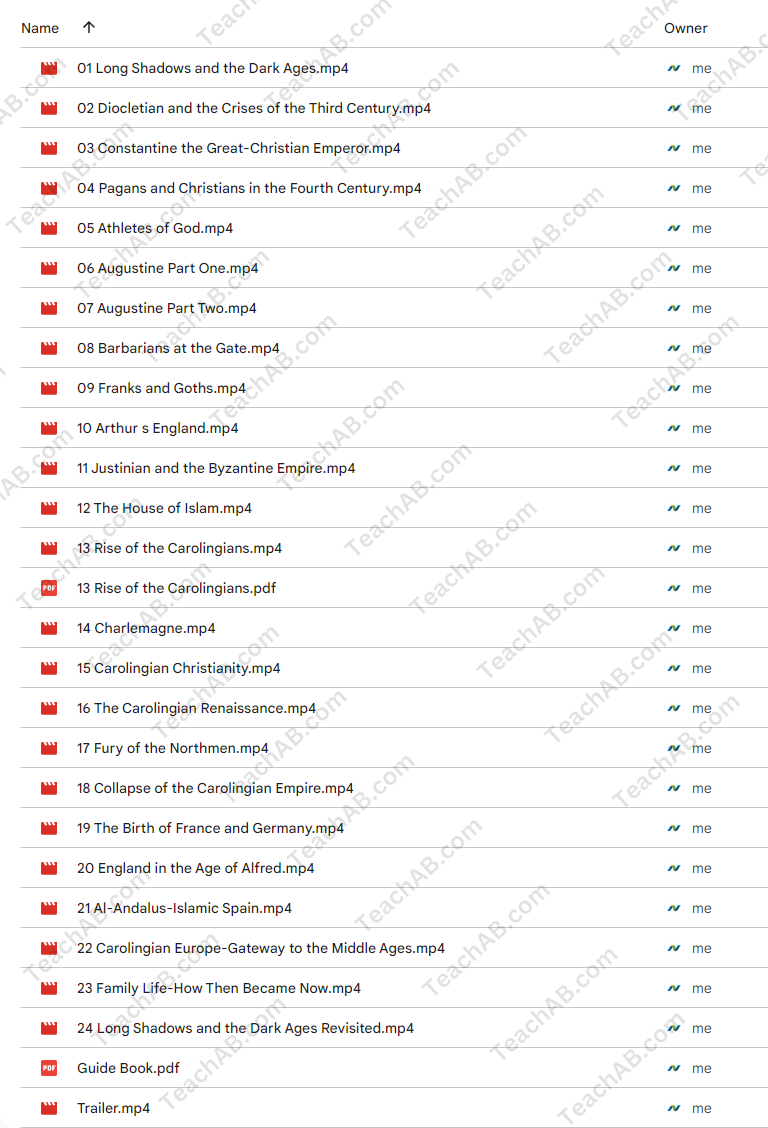
Content Proof:
A Journey Through the Early Middle Ages: Insights from Philip Daileader
The early Middle Ages, often portrayed through a veil of darkness and obscurity, is a period that invites both fascination and misunderstanding. In his captivating work, The Early Middle Ages, Philip Daileader peels back the layers of myth and misconception, presenting a nuanced view of an age that was not merely a prelude to the Renaissance but a pivotal era that laid the groundwork for modern Europe. Spanning from the 5th to the 10th centuries, this era witnessed profound transformations in politics, culture, religion, and economy. Through meticulous research and engaging prose, Daileader guides readers on an insightful exploration of this transformative epoch, compelling us to reassess our perceptions of the so-called “dark ages.”
Understanding the Political Landscape
Fragmentation of the Roman Empire
The political landscape of the early Middle Ages was marked by significant fragmentation following the fall of the Roman Empire. In his book, Daileader illustrates how the once-unified entity splintered into various kingdoms and political entities. The rise of the Byzantine Empire emerges as a focal point, exemplifying the continuity of Roman governance and culture in the East, while the West saw the emergence of Germanic kingdoms. Notably, the establishment of kingdoms such as the Visigoths, Ostrogoths, and Franks highlights the shifting power dynamics that characterized this period.
The fragmentation was not merely a loss of political unity but also a redefinition of identities. The Germans who filled the void left by the Romans brought their customs and traditions, blending them with the remnants of Roman culture. This metamorphosis is akin to a tapestry woven from diverse threads, each representing a unique culture contributing to the fabric of early medieval society.
The Rise of New Political Entities
As new kingdoms emerged, so too did various political entities with different governance structures and societal norms. Daileader meticulously details the rise of Charlemagne and the Carolingian Empire, which sought to revive the ideals of the Roman Empire through a feudal system. This revival led to the cultivation of a new social hierarchy, fundamentally altering the power dynamics within Europe.
The following table illustrates key political entities and their significance during this era:
| Political Entity | Key Figures | Significance |
| Byzantine Empire | Justinian I | Retained Roman law and culture; expansion efforts |
| Frankish Kingdom | Charlemagne | Promoted cultural revival; Christian Empire |
| Anglo-Saxon Kingdoms | Alfred the Great | Unification of England; defense against Viking invasions |
| Kingdom of the Lombards | Agilulf | Control over northern Italy; interaction with Byzantium |
The Cultural Developments of the Era
Continuity and Transformation
One of the most intriguing aspects of the early Middle Ages highlighted by Daileader is the paradox of continuity and transformation within cultural practices. While there was a discernible shift from the high culture of Rome, certain elements persisted, particularly through the efforts of monastic institutions. Monasteries became beacons of knowledge, safeguarding classical literature and fostering the scholarship that would eventually rise from the ashes of the Roman world.
Cultural transmission during this period can be likened to the careful passing of a torch through generations. Monks painstakingly transcribed ancient texts, ensuring that knowledge did not become extinguished in the darkness. The dynamic interplay between the preservation and transformation of culture serves as a reminder that the early Middle Ages were not a time of complete decline but rather a period of adaptation and reimagining.
The Role of Monastic Institutions
Monastic institutions played an essential role in shaping the cultural landscape of early medieval Europe. They acted as centers of learning, where religious and secular texts were copied and taught. The importance of figures like St. Benedict became apparent as his Rule set forth an ideal of monastic life that would influence countless communities. This movement towards monasticism can be viewed as society’s response to the chaos of the post-Roman world, seeking stability through spiritual dedication and intellectual pursuits.
Daileader notes that monasticism aided in the dissemination of Christian teachings, which were often intertwined with the remnants of classical knowledge. The artwork and manuscripts produced in these settings are a testament to the vibrant cultural legacy that emerged despite the tumultuous backdrop of the era.
The Religious Changes and Their Impact
The Spread of Christianity
A significant theme in Daileader’s examination is the spread of Christianity during the early Middle Ages. This era marked a profound transformation in the religious landscape of Europe, catalyzed by missionary activities that aimed to convert various tribes and communities. Figures such as St. Patrick and St. Augustine played pivotal roles in this mission, exemplifying the active engagement of the Church in shaping societal values and political allegiances.
The establishment of the Church’s authority was instrumental in unifying disparate groups under a common faith. It acted as both a spiritual guide and a political power, influencing rulers and laws across kingdoms. The synthesis of faith and governance facilitated the creation of a collective European identity, which would endure and evolve.
The Role of Missionaries
Missionaries during the early Middle Ages served as cultural intermediaries, spreading not only religious beliefs but also literacy and social organization. They often utilized local customs and languages, adapting their messages to resonate with the indigenous population. This adaptability can be seen as a brilliant strategic move, akin to a skilled artist blending new pigments to create a vibrant masterpiece.
Daileader illustrates how this process of Christianization not only altered spiritual practices but also shaped art, architecture, and societal values. Churches became symbols of authority and cultural pride, with their structures reflecting both religious devotion and local craftsmanship.
Economic Factors Transforming the Era
Shift in Economic Systems
Daileader emphasizes the remarkable transition of the economy from the monetized system of the Romans to a localized and agrarian framework. The collapse of centralized trade networks forced communities to reestablish self-sufficient economic practices, resembling a shift from a complex, interwoven fabric to a series of patchwork squares.
In this new economic landscape, bartering became commonplace, and communities relied on localized resources instead of distant markets. A significant consequence of this shift was the rise of the manor system, where lords owned lands and peasants worked them in exchange for protection. This feudal structure would dominate European society for centuries to come.
The Impact on Trade and Society
The transformation of the economy had profound implications on societal structures. As trade relations diminished, urban centers began to decline, leading to a more rural society. This shift directly impacted social hierarchies; the previously dominant urban bourgeoisie lost power while rural nobility gained influence.
To encapsulate the economic transition, consider the following list of key characteristics:
- Local Bartering Systems: Increased reliance on local goods.
- Decline of Urban Centers: Many towns saw diminished populations and trade activity.
- Rise of Feudalism: Land ownership became synonymous with power and security.
- Self-Sufficiency: Communities focused on agriculture and household production.
Art and Architecture: Reflections of a Changing Era
Evolution of Artistic Styles
Daileader also delves into the evolution of artistic styles during the early Middle Ages. The period is characterized by a fusion of Roman artistic traditions and emerging local styles, leading to unique artistic expressions. Illuminated manuscripts, intricate metalwork, and religious iconography became characteristic of early medieval art, reflecting both reverence and cultural identity.
Art during this time can be viewed as a window into the worldview of early medieval people. Just as a mirror reflects the image of its beholder, the art of this era mirrored the complexities of faith, identity, and community. Artists, often working in monasteries, created works that served both decorative and didactic purposes.
Architectural Innovations
Alongside artistic developments, architectural innovations emerged as well. The construction of early medieval churches and fortifications marked a significant evolution in building techniques and materials. Structures began to take on more robust forms, utilizing stone instead of wood, allowing for both durability and aesthetic appeal.
This architectural evolution can be likened to a protective shell surrounding a delicate organism; the churches provided physical safety while simultaneously fostering spiritual growth. The intricate designs of these early structures, such as the Carolingian revival of Roman basilicas, symbolize the resilience and aspirations of a society redefining itself.
Sources and Methodology in Historical Examination
Interdisciplinary Approach
Daileader’s methodology blends various historical sources, including archaeological findings, primary texts, and contemporary scholarship. This interdisciplinary approach is significant in illuminating the complexities of early Middle Ages, moving beyond classical narratives steeped in antiquity. By incorporating diverse perspectives, Daileader offers a rich tapestry that showcases the era’s multilayered nature.
Throughout the book, references to historians and scholars who have contributed to the discourse on this period underscore the collaborative nature of historical scholarship. This intertextual dialogue enriches the reader’s understanding and appreciation of the complexities inherent in the early Middle Ages.
Accessibility for All Readers
Daileader’s aim is to make the content accessible, not just for scholars but also for enthusiasts of medieval history. His engaging writing style and clear explanations invite readers to journey through the past, igniting curiosity and appreciation for an era often overlooked.
The seamless integration of narratives, facts, and interpretations captivates readers, turning what could be a dry recounting of facts into a vibrant saga of human experience. This approach ensures that the early Middle Ages are understood as a dynamic and transformative period rather than a mere void in history.
Conclusion: Reassessing the Early Middle Ages
In conclusion, Philip Daileader’s The Early Middle Ages serves as an essential resource for understanding a critical period in European history. Through careful analysis of the political, social, cultural, and economic shifts that defined the era, Daileader challenges the simplistic narratives often associated with the “dark ages.” Instead, he presents a view of a period filled with resilience, adaptation, and transformation.
By exploring the complexities of this epoch, Daileader prompts us to reconsider our perceptions and appreciate the rich legacy that these centuries contributed to the tapestry of Western civilization. The early Middle Ages were not merely a time of stagnation, but a vibrant period that set the stage for the evolution of Europe into the Renaissance and beyond. As we navigate our own complex world, the lessons of adaptability and resilience from the early Middle Ages remain ever relevant.
Frequently Asked Questions:
Business Model Innovation: We use a group buying approach that enables users to split expenses and get discounted access to well-liked courses. Despite worries regarding distribution strategies from content creators, this strategy helps people with low incomes.
Legal Aspects: There are many intricate questions around the legality of our actions. There are no explicit resale restrictions mentioned at the time of purchase, even though we do not have the course developers’ express consent to redistribute their content. This uncertainty gives us the chance to offer reasonably priced instructional materials.
Quality Control: We make certain that every course resource we buy is the exact same as what the authors themselves provide. It’s crucial to realize, nevertheless, that we are not authorized suppliers. Therefore, our products do not consist of:
– Live coaching calls or sessions with the course author.
– Access to exclusive author-controlled groups or portals.
– Membership in private forums.
– Direct email support from the author or their team.
We aim to reduce the cost barrier in education by offering these courses independently, without the premium services available through official channels. We appreciate your understanding of our unique approach.
Be the first to review “The Early Middle Ages By Philip Daileader”
You must be logged in to post a review.
Related products


$5.00


$5.00

Reviews
There are no reviews yet.