
 Exploring the Cosmic Mind Through Psychedelics With Chris Bache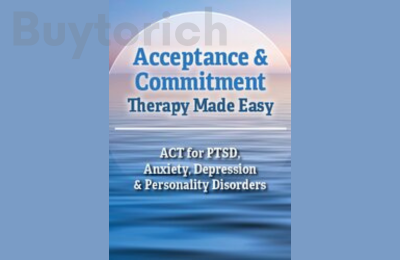
Acceptance and Commitment Therapy Made Easy: ACT for PTSD, Anxiety, Depression & Personality Disorders By Daniel Moran
$23.00
Acceptance and Commitment Therapy Made Easy: ACT for PTSD, Anxiety, Depression & Personality Disorders By Daniel Moran – Immediate Download!
Content Proof:

In a world full of unrelenting expectations and psychological challenges, mental health is becoming a more important topic in modern culture. Effective tools and treatment strategies are crucial for mental health providers since the intricacies of diseases including post-traumatic stress disorder (PTSD), anxiety, depression, and personality disorders can have a significant impact on people. In this difficult environment, Daniel J. Moran’s book Acceptance & Commitment Therapy Made Easy: ACT for PTSD, Anxiety, Depression & Personality Disorders provides a ray of hope and usefulness.
In addition to providing practitioners with practical ways to assist their clients in navigating the turbulent waters of psychological distress, this guide deconstructs acceptance and commitment therapy (ACT) into easily understood portions. We will examine the essential elements of ACT, its real-world applications, and its transformative potential in improving the lives of individuals impacted by mental health difficulties as we dig into the complexities of Moran’s work.
An Overview of Commitment and Acceptance Therapy
Because of its distinctive methodology, which places a significant focus on acceptance and mindfulness, ACT distinguishes out among psychological treatments. Fundamentally, ACT promotes psychological flexibility by encouraging people to interact with their ideas and feelings rather than suppress them. This adaptability is especially important for PTSD patients, who frequently use avoidance techniques as a coping strategy. Moran shows how embracing these experiences can result in empowerment and healing rather than repressing them.
ACT’s description of the mind as a “fuse box” is one of its enlightening features. The fuse could burst when feelings become too strong or traumatic events start to interfere with day-to-day functioning, leading people to steer clear of uncomfortable circumstances. However, ACT gives patients the ability to confront their concerns, actively engage with their experiences, and eventually regain control over their lives—much like resetting a fuse. People can better comprehend their difficulties and create more effective coping mechanisms by changing the story surrounding their mental health.
Moran’s case studies offer striking illustrations of people who have profited from ACT’s tenets. These stories emphasize how crucial it is to deal with avoidance tendencies and show how clients can undergo significant change when they interact with their ideas and feelings. The advice in Moran’s book, which outlines useful activities that may be incorporated into treatment sessions to promote this vital connection, is priceless for mental health practitioners looking to put these ideas into practice.
Key Components of ACT
ACT comprises six core processes: acceptance, cognitive defusion, being present, self-as-context, values, and committed action. Each of these elements works synergistically to enhance psychological well-being and facilitate healing.
- Acceptance: Encouraging clients to open up to their feelings, rather than resist them. This process is akin to a river; attempting to climb out of its current will only lead to exhaustion, whereas allowing oneself to float with the flow can promote serenity.
- Cognitive Defusion: This technique involves distancing oneself from difficult thoughts. It’s comparable to observing clouds drifting through the sky; just as clouds come and go without altering the sky, so too do thoughts pass without defining one’s identity.
- Being Present: Emphasizing mindfulness. Clients learn to anchor themselves in the here and now, cultivating awareness of their thoughts, feelings, and the world around them, much like a tree firmly rooted while the winds blow.
- Self-as-Context: Helping clients understand that their sense of self is more than their thoughts and experiences. This principle suggests that individuals can step back and observe their thoughts, opening the door to a broader perspective on their identity.
- Values: Identifying what truly matters. By clarifying their values, clients can direct their actions toward meaningful goals, fostering motivation and purpose in their lives.
- Committed Action: Developing plans to make value-based changes. Clients are encouraged to take actionable steps toward their goals, reinforcing a sense of agency and empowerment.
By intricately weaving these components into therapy, Moran enhances practitioners’ ability to support their clients effectively. His clear-cut explanations and engaging exercises make these concepts accessible, ensuring that therapists can enhance their efficacy when working with patients suffering from PTSD, anxiety, depression, and personality disorders.
Use of ACT in Therapy in Real-World Applications
In addition to outlining theoretical frameworks, Moran’s book is filled with real-world examples and exercises that can be used immediately in therapeutic contexts. This section of the book equips professionals with a set of simple yet effective tactics.
In one activity, for example, clients are asked to picture their worries as manipulable objects. Clients are able to understand that these concerns do not define them thanks to this cognitive defusion technique. People can see their concerns objectively by externalizing them, which opens the door to a more positive emotional interaction.
In addition, Moran stresses how crucial it is to provide a compassionate and secure therapeutic setting. Clients are more inclined to be open and discuss their upsetting experiences in a friendly environment. When discussing delicate subjects, this emotional safety is crucial because it enables clients to delve deeply into their feelings and thoughts.
Additionally, Moran streamlines the treatment process by giving physicians structured session goals and schedules. Therapists can stay focused and help their clients move toward significant change by clearly outlining the goals and procedures for each session.
The Value of Acceptance and Mindfulness
The cornerstones of ACT are acceptance and mindfulness, which set it apart from other therapeutic approaches. According to Moran, it is crucial for clients who are struggling with anxiety, despair, or trauma to be able to recognize and accept their emotional state. This acceptance is an active engagement with emotions that builds resilience, not just a passive acceptance.
People who practice mindfulness learn to notice their thoughts and emotions objectively. This technique can promote a stronger sense of control and minimize the severity of unpleasant emotions. A client might, for instance, concentrate on their breathing during a mindfulness activity, which enables them to separate their thoughts and feelings.
When these ideas are incorporated into therapy, amazing outcomes can occur. Mindfulness exercises have been shown to dramatically lessen the symptoms of despair and anxiety.
Participants in mindfulness-based interventions had significant improvements in their mental health, which in turn led to increased life satisfaction, according to a study published in the Journal of Clinical Psychology.
Moran’s focus on these methods is consistent with more general psychological research, confirming ACT’s capacity to promote emotional health. Therapists can help their clients deal with life’s obstacles more skillfully by encouraging a culture of acceptance and awareness.
Addressing Comorbid Conditions and Personality Disorders
One of the striking aspects of Moran’s work is its applicability to various mental health conditions, including personality disorders. Many individuals struggling with personality disorders often experience significant distress and relational difficulties. ACT provides a framework for understanding these complexities and fostering healing.
Incorporating ACT within a therapeutic context enables clinicians to address the core features of personality disorders, such as experiential avoidance and rigid thinking patterns. For example, a client with borderline personality disorder may struggle with fluctuating emotions. Through ACT, they learn to accept these emotions rather than act impulsively. This practice encourages healthier decision-making and improves interpersonal relationships.
The effectiveness of ACT for personalized treatment plans reflects a growing trend in mental health care, where tailored approaches yield greater outcomes. Studies indicate that ACT can significantly reduce the symptoms associated with personality disorders, enhancing overall well-being.
Comparative Efficacy of ACT and Traditional Therapies
To better appreciate the value of Moran’s guide, it’s beneficial to consider the comparative efficacy of ACT against traditional therapeutic practices. While traditional cognitive-behavioral therapy (CBT) has long been a standard, ACT offers distinct advantages due to its holistic and flexible nature. Here’s a breakdown comparing the two:
| Feature | Acceptance & Commitment Therapy (ACT) | Cognitive-Behavioral Therapy (CBT) |
| Focus | Acceptance of emotions | Changing negative thought patterns |
| Mindfulness | Emphasizes mindfulness | Minimal focus on mindfulness |
| Flexibility | Promotes psychological flexibility | Generally more structured |
| Application | Broad (PTSD, anxiety, depression) | Primarily anxiety and depression |
| Goal | Value-based living | Symptom reduction |
This comparison illustrates how ACT enriches the therapeutic landscape, providing innovative techniques that resonate more deeply with certain populations. By understanding the nuances between these approaches, mental health professionals can choose the most appropriate methodologies for their clients, guided by Moran’s accessible insights.
Empathic Therapy Methods
The importance of empathy and understanding in the therapeutic alliance is highlighted by Daniel Moran’s work. Therapists can create a space where clients feel heard and protected by acknowledging the deep complexity that trauma brings into a person’s life. This compassionate approach not only improves the therapeutic process but also fits in well with the ACT tenets.
Every therapy session turns into a chance to build rapport, allowing patients to express their worries and experiences. In order to assist clients feel validated and supported, Moran’s guidance places a strong emphasis on the value of a compassionate approach.
Self-compassion is also a part of therapy’s empathetic component. Despite their mental health issues, Moran advises therapists to remind their patients of their intrinsic value. Clients are more likely to participate in therapy and use healthier coping mechanisms when they are encouraged to feel good about themselves and accepted.
Empathy-based ACT fosters healing in addition to providing a supportive therapy setting. Feeling understood encourages clients to face their concerns, which eventually allows for life-changing change.
In conclusion
Easy Acceptance & Commitment Therapy by Daniel J. Moran: In the constantly changing world of mental health, ACT for PTSD, Anxiety, Depression & Personality Disorders is an essential tool. Clinicians can enable their clients to face their challenges with bravery and resiliency by adopting the ACT principles and incorporating them into their therapy practice. For those battling the difficulties of trauma, anxiety, depression, and personality disorders, ACT provides a life-changing experience with a focus on acceptance, mindfulness, and the growth of psychological flexibility.
The practical methods offered in Moran’s guide promote hope and healing in a world where mental health issues are still widespread. When mental health practitioners follow these guidelines, they can encourage their patients to see past their limitations and live true, purposeful lives. Moran’s sincere method strikes a deep chord and captures the spirit of mending one step at a time.
Frequently Asked Questions:
Business Model Innovation: We use a group buying approach that enables users to split expenses and get discounted access to well-liked courses. Despite worries regarding distribution strategies from content creators, this strategy helps people with low incomes.
Legal Aspects: There are many intricate questions around the legality of our actions. There are no explicit resale restrictions mentioned at the time of purchase, even though we do not have the course developers’ express consent to redistribute their content. This uncertainty gives us the chance to offer reasonably priced instructional materials.
Quality Control: We make certain that every course resource we buy is the exact same as what the authors themselves provide. It’s crucial to realize, nevertheless, that we are not authorized suppliers. Therefore, our products do not consist of:
– Live coaching calls or sessions with the course author.
– Access to exclusive author-controlled groups or portals.
– Membership in private forums.
– Direct email support from the author or their team.
We aim to reduce the cost barrier in education by offering these courses independently, without the premium services available through official channels. We appreciate your understanding of our unique approach.
Be the first to review “Acceptance and Commitment Therapy Made Easy: ACT for PTSD, Anxiety, Depression & Personality Disorders By Daniel Moran”
You must be logged in to post a review.
Related products


Psychology


Psychology
Reviews
There are no reviews yet.