
-
×
 Fantasy Software Add-On by John Truby
1 × $23.00
Fantasy Software Add-On by John Truby
1 × $23.00 -
×
 Book Cover Design Course Bundle by Mandi Lynn
1 × $85.00
Book Cover Design Course Bundle by Mandi Lynn
1 × $85.00
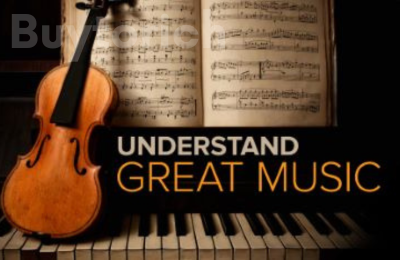
How to Listen to and Understand Great Music, 3rd Edition By Robert Greenberg
$5.00
How to Listen to and Understand Great Music, 3rd Edition By Robert Greenberg – Immediate Download!
Content Proof:

How to Listen to and Understand Great Music: A Review of the 3rd Edition by Robert Greenberg
Listening to music is a universal joy, transcending geographical, linguistic, and cultural barriers. It has the ability to evoke emotions, paint vivid pictures in our minds, and even connect us to moments of our past that we hold dear. The question arises: how can we enhance our understanding and appreciation of music, particularly classical music? In his insightful series, How to Listen to and Understand Great Music, 3rd Edition, Robert Greenberg takes us on a journey that delves deeply into the complexity and richness of music. His lectures serve not just as an educational tool but also as an emotional guide that assists both novice music lovers and seasoned enthusiasts in connecting with the art form on a deeper level.
In this review, we’ll explore the key components of Greenberg’s work, breaking down the techniques and insights he provides on understanding music. The series includes nearly 48 lectures that chronicle the evolution of Western music from its ancient roots to contemporary compositions. Through this in-depth look, we will analyze how the course is structured, compare its content with other educational resources, and discuss its cultural implications. As we venture on this exploration, we will uncover how to effectively approach listening to classical music, transforming it from mere background noise into a profound experience.
Overview of the Course Content
Historical Context and Relevance
The series is rich in content, rich in history, and spans a wide array of composers and their styles. Each lecture is meticulously designed to not only inform but to engage the listener with musical examples that bring the concepts to life. From Bach’s intricate counterpoint to Beethoven’s passionate symphonies, Greenberg presents a tapestry of Western music that allows listeners to appreciate how historical events shaped the development of various musical styles.
This enriching historical context is crucial in understanding why certain compositions resonate with listeners. The examination of historical and social influences on composers like Mozart and Wagner fleshes out the music, adding layers of meaning that go beyond the notes on a page. For instance, listening to Wagner while understanding his ties to German nationalism enhances the experience. Music becomes not just an auditory pleasure but a powerful commentary on the society of its time.
Musical Techniques and Appreciation
Greenberg skillfully breaks down complex musical techniques into digestible parts. He simplifies concepts such as harmony, melody, and rhythm making them accessible to learners regardless of their prior musical knowledge. He demonstrates, for example, how these elements interact to create emotional depth in pieces like Beethoven’s Fifth Symphony, allowing listeners to appreciate the nuances in a manner akin to peeling layers off an onion.
Moreover, Greenberg emphasizes the importance of active listening. He encourages listeners to engage with music, asking them to identify specific components within a composition that evoke particular emotions. This technique is analogous to color theory in visual art; just as a painter uses a palette to create mood and depth, a composer employs various musical devices to convey emotions. By dissecting these components, listeners gain tools to appreciate music not just for its surface beauty but for its emotional and intellectual complexities.
Engaging with Music
Techniques for Active Listening
In our pursuit to understand music more deeply, Greenberg proposes practical exercises that can significantly enhance our listening experience. One fundamental technique is familiarization with the pieces. He suggests starting with music that resonates personally and listening repetitively until one becomes comfortable with its elements. After all, just as a book often requires multiple readings to uncover deeper meanings, music often unfolds its layers through familiarity.
- Listening exercises: Engage with various renditions of the same piece compare orchestral versions with solo interpretations.
- Score reading: If possible, follow along with sheet music to see how the notes correlate with what you hear.
- Journaling: Write down thoughts about what emotions different sections evoke or how particular instruments contribute to the overall sound.
These steps are instrumental in moving beyond passive consumption to active engagement, allowing the music to resonate more profoundly within us.
Cultural Connections and Emotional Resonance
Music is not just a collection of notes, but a reflection of identity and culture. Greenberg underscores this connection by highlighting how various composers infused their work with cultural elements that defined their era. For instance, the spirituality in Bach’s suites mirrors the religious fervor of his time while impressionistic elements in Debussy’s music evoke the shimmering light of a Parisian sunrise.
This intersection of music, emotion, and culture creates a rich tapestry that listeners can explore. By understanding the historical and social contexts that shape music, we are granted access to emotional resonances that are relatable on a personal level. Greenberg urges listeners to connect their life experiences with the stories and sentiments expressed in the music, cultivating a more personal relationship with compositions.
Formats and Accessibility
Learning in Diverse Styles
The great thing about Greenberg’s How to Listen to and Understand Great Music series is its accessibility across various formats. Whether you are a visual learner who prefers watching videos or someone who absorbs information better through audio lectures, this series accommodates all preferences. This flexibility makes the learning curve more approachable, particularly for those who might feel intimidated by classical music.
- Audio lectures: Ideal for listening during commutes or workouts.
- Video lectures: Provides visual cues and additional elements that enrich the learning experience.
- Supplementary materials: Includes handouts and musical annotations that offer further insights and context.
This multi-format approach aligns well with diverse learning styles, ensuring that anyone eager to deepen their understanding of music can do so effectively.
Comparison with Other Educational Resources
While several resources exist for learning about music, few match the depth and engagement of Greenberg’s series. Many conventional music appreciation courses may offer only a surface-level understanding without encouraging deep emotional connections with the pieces. In contrast, Greenberg’s lectures serve not only as historical narratives but also as invitations to feel and interpret music in a more nuanced way.
Moreover, platforms like MOOCs (Massive Open Online Courses) or YouTube can provide insights into musical theory but may lack the structured depth that Greenberg offers. His step-by-step approach, combining history, technical analysis, and engaging narrative, allows listeners to develop a comprehensive framework for understanding music holistically.
Conclusion
Robert Greenberg’s How to Listen to and Understand Great Music, 3rd Edition is more than just a music appreciation guide; it is an invitation into a captivating world where history, emotion, and culture collide in harmony. By exploring various elements, techniques, and cultural contexts within the series, listeners are equipped with tools to not only understand how music is constructed but also how it connects to the broader narrative of human experience. Whether for the seasoned audiophile or the curious beginner, Greenberg’s work inspires us to listen deeply, feel profoundly, and understand richly, transforming our relationship with music into a journey that endlessly unfolds.
Frequently Asked Questions:
Business Model Innovation: We use a group buying approach that enables users to split expenses and get discounted access to well-liked courses. Despite worries regarding distribution strategies from content creators, this strategy helps people with low incomes.
Legal Aspects: There are many intricate questions around the legality of our actions. There are no explicit resale restrictions mentioned at the time of purchase, even though we do not have the course developers’ express consent to redistribute their content. This uncertainty gives us the chance to offer reasonably priced instructional materials.
Quality Control: We make certain that every course resource we buy is the exact same as what the authors themselves provide. It’s crucial to realize, nevertheless, that we are not authorized suppliers. Therefore, our products do not consist of:
– Live coaching calls or sessions with the course author.
– Access to exclusive author-controlled groups or portals.
– Membership in private forums.
– Direct email support from the author or their team.
We aim to reduce the cost barrier in education by offering these courses independently, without the premium services available through official channels. We appreciate your understanding of our unique approach.
Be the first to review “How to Listen to and Understand Great Music, 3rd Edition By Robert Greenberg”
You must be logged in to post a review.
Related products


$5.00


$5.00

$31.00

$5.00

$5.00

$5.00

$46.00

Reviews
There are no reviews yet.